Welcome to
"The End of All Things"!
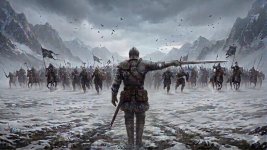
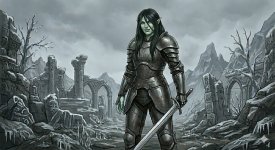
A vast & detailed dark fantasy world full of fanatical holy knights, masked assassins for hire, mentally ill monarchs ordering executions, supernatural entities pulling strings in the shadows, legendary kings of the past, despicable bandit clans, warrior societies training for the near future, disgraced nobles, realistic/gritty characters, laughs, cries, gasps, pirates, deep issues (addiction, political corruption, PTSD, vengeance, racial equality, destiny through bloodlines, and much more), murder mysteries, love, war, blazing fires, brooding mercenaries, giant lizard-beasts, cities built into mountains, an ocean where the sun does not shine, sea-serpents, and a path to the end of the world.
Can you stop it? Want to help contribute to the creation of this world? Inquire here with a comment if interested.
Be forewarned, multi-paragraph posting.
_____
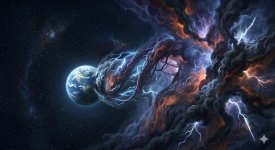
A quiet peace has reigned over the beautiful, colossal continent of Seldwa for just a few short years. The continent, which covers over half of the planet's surface and is home to a massive portion of the planet's population, is split into several nations...
The Ice Empire Of T'Odis
The frozen crown of Seldwa
OVERVIEW
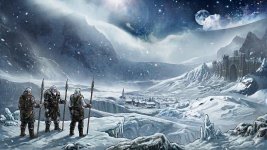
T'Odis is a shrill and cold land sitting at the northernmost end of the continent, protected by the impassable
Great Ice Mountains. Governed by strict laws and defined by deathly winters, it remained isolated from the south for millennia. Only two centuries ago was the
T'Odis Gate—a massive man-made structure in the heart of the mountains—opened to allow for cautious trade. It is a land where survival is not a right, but a daily accomplishment forged through iron and ice.
THE IMPERIAL LANDS
| Territory | Governance | Identity & specialty |
| The Lawful Lands | The Imperial State | The Middle and East. Strict government hold where laws are absolute. Industrial hubs for mining and whale-harvesting. |
| The Lawless Lands | Tribal Warlords | The Western fringe. Barbaric clans that pay tribute to the Empire. A buffer zone of nomadic hunters and raiders. |
| The T'Odis Gate | Imperial Sentries | The only foot-path through the mountains. A neutral "Cold Zone" for trade between giants and the "small men" of the south. |
LAW & SOCIAL MECHANICS
- The Justice Hordes: Groups of nine exceptionally trained knights, raised as orphans by the state. They serve as judge, jury, and executioner, stopping at nothing to hunt down those "Marked" for breaking the Law.
- The Tax Collectors: Elite squads of warriors and scholars sent into the Lawless Lands to extract tribute (furs, herbs, or conscripts). These missions are dangerous and often result in bloody skirmishes.
- Imperial Isolation: T'Odis maintains a policy of cautious observation. They view Kilderland affairs as the buzzing of flies and rarely intervene, remembering the "slaughter" of southern explorers who once tried to breach the frost.
ETHNICITIES & PHYSIOLOGY
The T'Odis race is defined by their immense stature and adaptation to the extreme cold:
- Stature: Average height is 6'6", with the tallest men reaching nearly 8'0". They range from statuesque, svelte forms to massive walls of muscle.
- Appearance: Chalk-white skin, icy blue or gray eyes, and bone-white hair from birth.
- Anomalies: "Black-haired" T'Odis are rare genetic anomalies, often treated as omens or outcasts.
- The Northern Reach: Gilgrend citizens are the tallest in Kilderland (5'10"-6'), a physical byproduct of living in the shadow of the Ice Mountains.
RELIGION: THE WHITE
Core Philosophy: The Stillness
The White is the state religion of the Lawful Lands, centering on the belief that existence is a chaotic flicker of "noise" within an eternal, perfect frost. Followers strive for The Stillness—a state of absolute emotional coldness and discipline. In T’Odisian theology, "heat" (passion, mercy, or rebellion) is a spiritual rot that leads to weakness and eventual extinction.
The Pillars of the Frost (The Pantheon)
- Varn: The Stone-Father: God of the deep mountains and the forge. He governs the "T'Odis-Craft" engineering and the unyielding labor required to carve life from the ice.
- Vaxara: The Blind Matriarch: Patron of the Justice Hordes. She represents the Law as a blizzard: impartial, sightless, and absolute.
- Vrex: The Red-Tide: God of War and blood on the snow. He represents the violent defense of the North and the martial strength required to protect The Stillness.
Key Rituals & Icons
- The Trial of Iron: A grueling rite of passage where a T'Odis must survive a night in the open frost without fire. Those who endure are considered "Tempered."
- The Living Glacier: Emperor Varxas T’Udin I is worshipped as the physical anchor of the faith. He is viewed as a monument of endurance, though his own faith was privately shattered by the losses of the Pa Xhuum War.
- Ecclesial Isolation: The T’Odis do not proselytize. They believe the winter will eventually claim those too weak to embrace the cold, viewing southern faiths as messy and fractured.
CURRENT ISSUES & STATUS
The Empire is currently in a state of stagnant survival.
Emperor Varxas T'Udin I, 120 years old, rules as a living relic. The
T'Odis-Pa Xhuum War decimated the Imperial line, leaving a "generational vacuum" and only one surviving heir: the Emperor’s great-grandson,
Varxas T'Udin II. Life is defined by the way of the land—frost-scarring is a badge of labor, heat-sickness is a constant threat to those near the Gate, and the Justice Hordes ensure the fear of the Law is colder than the winter itself.
___
The Holy Queendom of Roadalia
The religious shoulder of Seldwa
OVERVIEW
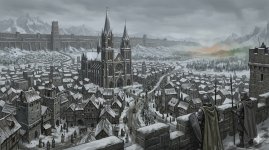
Roadalia is a sovereign bunker, physically and culturally sealed away from the "sinful" southern world of Kilderland by the massive Roadalian Wall. Born from a 180-year-old rebellion against slavery, it has since curdled into a selective theocratic matriarchy. It is a land of mandatory devotion, where the sound of the wind is drowned out by perpetual hymns and the sight of the horizon is blocked by the grey stone of the Wall. Here, survival is tied directly to spiritual purity, and dissent is a death sentence.
THE QUEENDOM LANDS
| Territory | Governance | Identity & specialty |
| The Wall Provinces | Holy Knights of Azae | The Northern and Eastern fringes. A frozen, industrial landscape of stone-quarries and iron. Defensive hubs where patrolling the Wall is a "Holy Duty." |
| The Cathedral Cities | High Priestesses | The central heartland. Dominated by massive stone churches and children's choirs. Theocratic oversight is absolute; thoughts are monitored and "The Way of the Mother" is the only allowed reality. |
| The Swazi Rainforest | The Southern Guard | The "Southern Tail." A tactical anomaly of humid, dense jungle bordering Tungwa. The primary hub for the Black Market, where Alcohol, Black-Tar, and Pashush flow under the nose of the state. |
LAW & SOCIAL MECHANICS
- The Selective Succession: Queens are not born; they are hand-picked. The reigning monarch grooms her successor from the ranks of the Holy Knights of Azae. This ensures the military and the faith remain a singular, unbreakable machine, though it leaves the throne vulnerable to the mental state of a single woman.
- The Way of the Mother: A radical interpretation of Azae that bans all secular art, music, or literature. Anything that does not glorify the Mother is considered contraband and is fed to the "Purification Pits." Vanity is a crime; citizens wear multiple layers of dull, plain clothing to eliminate individual identity.
- Clerical Oversight: Every village is supervised by a local Cleric who reports directly to the High Priestesses. They manage tithes and act as moral police, ensuring the fear of the Goddess is present in every home.
ETHNICITIES & PHYSIOLOGY
The Roadalian populace is a blend of the original Kilderland rebels and the freed Nomasda:
- Stature: Average height is 5'7" to 5'9". The "Modern" Roadalian is often a blend of Kilderland facial features and the resilient, athletic stature of the Nomasda south.
- Appearance: Pale to dark-brown skin depending on the citizen's ethnic background, usually framed by plain, dull dressings. Flashy colors and jewelry are strictly illegal, leading to a monochromatic, grey-and-brown aesthetic across the populace.
- The Nomasda Underclass: Despite the legal abolition of classes, the Nomasda still primarily fill the labor class, living in the poorer sectors of Kanzar and working the most dangerous quarrying jobs for the Wall.
RELIGION: THE WAY OF THE MOTHER
Core Philosophy: The Great Correction
The Way of the Mother is the state religion of Roadalia, centering on the belief that the "Religion of Azae" practiced in Kilderland is a centuries-old lie. Followers believe the First Synod of Kein "re-cut" holy texts to replace the Mother with a Father to suit a patriarchal military structure. Roadalian Selandites strive for The Correction—restoring the original truth that the Goddess Azae is the Mother-Protector and the first human was a woman. In this theology, the world outside the Wall is a "fatherless" wasteland of rot, and only within the nation's "Womb" is life safe.
The Pillars of the Womb (The Pantheon)
- Azae: The Mother-Protector: The supreme deity of the faith. She is the architect of the interior, governing the preservation of the people and the spiritual "Sealing" required to keep the outside rot from penetrating the nation.
- Selander: The First Woman: The Progenitor of humanity. Her identity as a woman is the core of the Roadalian schism; she is viewed as the template for all Selandite life and the ultimate victim of the Kilderland "Usurpation."
- The Pontifess: The Living Mortar: The female head of the church. She is viewed as the living representative of Azae. Her authority is tied to the physical integrity of the state, often symbolized by ritualistic masonry gear and the heavy iron plumb-bob she carries.
Key Rituals & Icons
- The Sealing of the Gates: A physical and spiritual ceremony overseen by the Pontifess. It reinforces the belief that the people's collective faith is the literal mortar holding the stone of the Roadalian Wall together.
- Palimpsest Icons: Sacred relics where the "male" features of ancient Kilderland statues have been violently re-carved into feminine ones. These jagged, re-cut icons serve as a constant visual reminder of the break from the "Usurpation."
- Mother-Blue: The use of a specific, ancient mineral pigment in religious architecture. Roadalians claim this was the original color of the faith before the orthodox church ordered everything painted in "Soldier-Grey."
- Organic Geometry: The design of Roadalian cathedrals and the Wall itself. Unlike the sharp, square "Brutalist" angles of Kilderland, Roadalian engineering uses curves and arches to evoke the body and the safety of the womb.
CURRENT ISSUES & STATUS
The Queendom is currently in a state of terminal religious fervor. Queen Bwalya Dasa, 62 years old, rules as "The Holy Executioner." Her descent into mental instability has led her to declare herself a new prophet, enacting public torture on any who question her visions. Nine months ago, a "Spiritual Advisor" (the Herald Shala) positioned herself at the Queen's side, accelerating the purges and pushing the nation toward a war of purification. Below the surface, the "Allies of Freedom"—an underground network of non-believers—fight a quiet, desperate war to keep the original spirit of the Revolution alive.
___
The Old Conquered Kingdoms of Kilderland
The violent heart of Seldwa
OVERVIEW
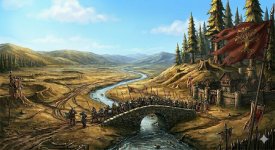
Kilderland is a vast continental territory defined by green, hilly fields, ancient mountain ranges, and the cold reaches of the
Dark Seas to the east. Once a collection of sovereign kingdoms, it was unified under the
Adrian Crown (Later the
Hildren Crown) through centuries of aggressive conquest. While a "rare state of peace" currently holds, the nation is a powder keg of generational trauma, suppressed resentment, and the ugly realism of medieval life.
THE SIX HOUSES OF THE REALM
| House | City-State | Identity & Specialty |
| House Hildren | Kilderland (Capital) | The High Crown. Paranoid imperialists ruling from the heart of the borders. |
| House Thorne | Corlhaven | Religious keepers of the Corl Forest. View forestry as a sacred, ritualistic duty. |
| House Valor | Iorn | "The Iron Reapers." New rulers who took power 10 years ago after House Iornia was wiped out. |
| House Nevarron | Nevos | Scholars and elite swordsmen. Shrewd, calculating, and led by the cold Lord Nevarrus. |
| House Marron | Silt-Harbor | Former mercenaries gifted nobility 10 years ago. Pragmatic and trade-focused hub. |
| House Gilger | Gilgrend | "The Grey Shield." Stoic defenders of the rugged, red-headed northern frontier. |
SOCIAL MECHANICS & ANNEXATION
- The Gilded Leash: Every vassal house must send its first-born male heir to the capital to serve in the Royal Army for ten years. This ensures fealty but leaves heirs culturally disconnected from their own people.
- Classism: A sharp divide exists between "Old Blood" (Thorne, Nevarron, Gilger) and "Upstarts" (Valor, Marron). The capital territory views all others as "Annexed" subjects.
- The Peasant Burden: The common class bears the scars of centuries of warfare, suffering heavy taxation and the physical toll of industrial labor.
ETHNICITIES & CULTURE
The people of Kilderland are Caucasian, inspired by medieval Europe (England, France, Germany, Scotland, & Spain), with distinct regional variations:
- Central (Kilderland & Iorn): Athletic builds, fair to olive skin. The "Continental Standard."
- Northern (Gilgrend & Corlhaven): Gilgrenders are pale, freckled, and famously red-headed. Those from Corlhaven are rugged and enduring.
- Southern (Nevos ): Lean frames, sharp features, and dark hair. Elite and arrogant.
- Coastal (Silt-Harbor): The most diverse due to foreign trade; lower racial prejudice but high class-based judgment.
RELIGION: ORTHODOX AZAE
Core Philosophy: The Five Ways to Peace
The monotheistic foundation of Kilderland, Orthodox Azae is the original and patriarchal interpretation of the faith from which the Roadalian schism was born. Codified by the First Synod of Kein and inspired by the rigid structures of medieval Christianity, the religion serves as the spiritual and moral anchor for the Hildren Crown. It posits that every soul is born into a cycle of rebirth, governed by the absolute commands of the deity Azae. While its cultural influence has waned as it became entangled with imperial politics, it remains the primary justification for the social order and the "Selandite" identity of the heartland.
The Pillars of the Command (The Pantheon)
- Azae: The One True God: The supreme, male creator and the spirit of the planet. Azae is viewed as a distant but absolute force who formed the world and remains in communion with powers beyond it. All living things are believed to be fragments of Azae’s soul, and the earth itself is his holy body.
- Selander: The Father of Civilization: The first man and the namesake of the continent. Orthodox theology holds that Selander was created by Azae in his own image. He is believed to be reborn in every generation; after ruling through many lives and dictating the Book of Azae, he vanished into the cycle of time, occasionally intervening in human affairs when needed.
- The Pontiff: The Holy Successor: The supreme patriarchal head of the church in Kein. The Pontiff is the living authority of the Orthodox faith, representing the unbroken male lineage of the First Prophet. His power is often in friction with the Crown, especially regarding the influence of the "Inner Circle."
- The Leader of the Mountain: The reclusive head of the "Brethren of the Mountain on Mt. Zalur". This leader is chosen each generation by determining which individual possesses the clearest, most accurate memories of their past lives.
Key Rituals & Icons
- The Five Ways to Peace: The cornerstone of the faith, once inscribed by Azae on the side of Mount Zalur: I. Trust Azae; II. Trust your family; III. Kill not; IV. Steal not; V. All are children of Azae. These commands are the absolute law for all believers.
- The Meditation of Rebirth: The spiritual belief that souls are destined to be resurrected in new lives. Through meditation and strict adherence to the "Ways," a follower secures a more meaningful role in future incarnations.
- The Way of Sin & Discourse: The spiritual fear that peace and perfection are unattainable. Those who stray run the risk of losing their soul completely, preventing their resurrection and sentencing them to an eternity of punishment in Hell.
- The Zalur Pilgrimage: A journey to the mountain city of Mt. Zalur to consult the "Brethren of the Mountain." These reclusive monks reject legends in favor of the "Words of the Mountain" and the collective memories of past lives recorded in their own ancient version of the Book of Azae.
- The Selandite Templars: A religious army stationed at major churches. Once a force of conquest, they now serve as the armored guardians of the faith, overseen by a coalition of the Pontiff, the Leader of the Mountain, and the Inner Circle.
- The Inner Circle of Discourse: A secretive, elite body within the church that allegedly makes decisions surpassing even the Pontiff. They are said to have recorded every transgression against the Way of Peace since the beginning of time.
CURRENT ISSUES
In this war-ravaged nation, the horrors of daily life are evident.
Addiction (such as the "Black-Tar" in the mines, long days of drinking in the taverns) and
PTSD (War-Sickness/Soldier Shakes) are systemic. Combat is messy, exhausting, and defined by attrition. The rare peace is a fragile facade maintained by a paranoid Crown and six headstrong noble families.
___
The Fishing Islands of Pa Xhuum
The Islands of Lights
OVERVIEW
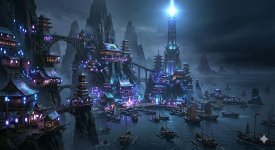
Known as the "Island of Lights", Pa Xhuum is a vertical maritime civilization carved into the jagged cliffs of the northeastern archipelago. A nation of master navigators and legendary serpent-hunters, the Pa Xhuumese have spent centuries defying the shadows of the Dark Seas and the reach of the T'Odis Empire. While the recent "Imperial Peace" has opened their sapphire-lit harbors to the world, the heart of the archipelago remains anchored in ancient traditions, lethal martial prowess, and a relentless devotion to the Sea God, Vavos. Here, leadership is not inherited—it is seized from the belly of a beast in the hemisphere of eternal night.
| Category | Information |
|---|
| Governance | The Calar (Life-Long Leader) |
| Current Ruler | Calar Dhumibol (Age 72, 51-year reign) |
| Capital City | Ka Ja Ta |
| Primary Deity | Vavos, the Sea God |
| Current Year | 1875 (Pa Xhuumese Calendar) |
| Primary Exports | Serpent Oil, Iridescent Scales, Sea-Meat |
GEOGRAPHY & AESTHETIC
Pa Xhuum is a vertical civilization built to withstand the "Dark Seas."
- The Glow: The nation is lit by processed Serpent Oil, giving the cities a permanent neon-blue sapphire radiance that fights back the ocean mist.
- The Dark Seas: A hemisphere of eternal darkness where the sun never rises. It is the only place to find the high-tier sea serpents that possess Vavos Pearls.
- Architecture: Massive, multi-tiered pagodas and bridges are carved directly into the coastal cliffs.
ETHNICITIES & CULTURE
- The Calar’s Pilgrimage: A potential leader must sail into the Dark Seas, slay a serpent, and return with a Vavos Pearl to earn the throne.
- The Tower of Ka Ja Ta: Powered by the Calar’s Pearl. When a Calar dies, the light is doused by the Council until a new successor returns, signaling an "Age of Blindness."
- The Language Gap: Traditionalists speak Old Pa Xhuumese (tonal and short), while the youth favor Kilderland Common for international trade.
- The Pa Xhuumese, often called "Sea-Wasps" by those who have felt their sting, are a diminutive but remarkably resilient people whose physiology has been hardened by the relentless salt of the archipelago and the crushing shadows of the Dark Seas. Averaging between 5’4” and 5’6” for males, they possess a lean, high-density musculature designed for the explosive speed required to hunt serpents and master the low-profile movements of Vavos-Ka. Taking visual inspiration from real-world East and Southeast Asian ethnicities, with skin tones ranging from pale gold to a salt-weathered bronze and hair as dark as the deep ocean. What they lack in reach, they more than compensate for with a prehensile-like balance and a low center of gravity that makes them the most stable sailors in the world—capable of dancing across a tossing deck while their larger T'Odis counterparts struggle to find their footing.
MILITARY & MARTIAL ARTS
- Vavos-Ka: The "Giant-Slayer" martial art. It focuses on low-profile entries to shatter the knees and ankles of T'Odis warriors, using their own stature against them.
- The Sea-Wasp Navy: Every private vessel is armed with harpoons and ballistae, making the entire population a standing militia against maritime invaders.
THE DIPLOMATIC BRIDGE
The 200-year war with the
T'Odis Empire ended with the arranged marriage of the youngest child,
Boonsri T'Odis (formerly Uduliade), to the Imperial Heir,
Varxas II.
While Boonsri resides in the Imperial capital at 20 years old, the peace remains fragile. Traditionalists in Ka Ja Ta view her as a "Golden Hostage," while the Merchant Clans view her as the ultimate security for their trade routes.
____
The Unbound Kingdom of Beros
The Shattered Hammer of Seldwa
OVERVIEW
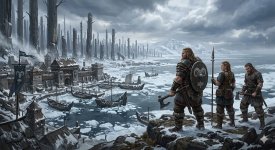
Beros is a sovereign, rugged territory situated in the far northeast corner of Seldwa. Bordered by the Great Ice Mountains to the north, Gilgrend to the west, and Corlhaven to the south, it is a land defined by extreme cold and "Impossible" petrified forests. Unlike the six houses of Kilderland, Beros is the only kingdom to successfully repel the Adrian Conquest, maintaining a fierce and bloody independence. They are a nation of "Breakers"—breaking the ice, breaking the silence of the north, and breaking the imperial chains of the Hildren Crown.
THE LEADERSHIP OF THE UNBOUND
| Title/Role | Seat of Power | Identity & Specialty |
| The High-Breaker | The Ice-Seat (Capital) | The Supreme Leader. A meritocratic ruler chosen by the respect of the Ice-Captains and Staal-Thanes. |
| Staal-Thane of the Coast | Breaker’s Reach | Masters of the Ice-Strider fleets. Responsible for the "Winter Crossing" and naval defense. |
| Staal-Thane of the Stone | Petrified Fringe | Guardians of the impossible forests. Experts in scavenging shatter-stone for ship prows and fortifications. |
| Staal-Thane of the Fringe | T'Odis Border | Linguistic specialists and merchants. Direct negotiators with the T'Odis giants using the Staal-Spech tongue. |
SOCIAL MECHANICS & SOVEREIGNTY
- The Stone-Law: Beros rejects the bureaucratic "Gilded Leash" of the south. Leadership is purely meritocratic; if a High-Breaker or Thane cannot lead a successful crossing or secure resources, their authority is "broken" by the Shatter-Moot.
- The Corl-Wood Pipeline: Despite their independence, Beros is physically dependent on House Thorne (Corlhaven) for living timber. This creates a high-stakes geopolitical valve where trade and smuggling fluctuate based on their current relationship with Kilderland as a whole.
- The Shatter-Moot: A gathering of free captains and Thanes where laws are debated with raw, brutal honesty. It is a system of "Functional Brutality"—if it doesn't work for the survival of the Unbound, it is discarded.
ETHNICITIES & CULTURE
The people of Beros are Caucasian, sharing a common ancestor with Kilderlanders but evolved into a much heavier, powerhouse breed due to the harsh Northeast:
- Physicality: While Gilgrends (The Shield) stand at 5'9"-6'0" with lean builds, Berosians are known as "Walking Tanks." They average 5'11" to 6'2" with broad shoulders, thick bone density, and significant natural mass.
- Linguistics: They speak Staal-Spech (Old-Kilderlander). A guttural, consonant-heavy language that shares ancient roots with the T'Odis giant tongue, allowing them to trade where southern "Common" speakers cannot.
- Religion: The Old Polytheistic Faith. They worship harsh spirits of the ice, stone, and sea, viewing the southern "Religion of Azae" as a weak, monotheistic delusion.
CURRENT ISSUES
Beros operates in a state of complete sovereignty. Constant skirmishing with
Gilgrend (The Shield of the North) over trade monopolies and the T'Odis Gate defines their borders. Their primary economy relies on "Ice-Striders"—hybrid ships with living Corl-wood hulls and petrified stone-wood prows—to bypass imperial taxes by crossing the frozen sea.
Like the rest of Seldwa, they are
completely in the dark regarding Engriact and the Heralds. There is no prophecy to guide them; the High-Breaker is currently focused on the fragility of the Corl-wood pipeline and the next frozen crossing to T'Odis. The survival of the Unbound depends on the ice, the wood, and the weight of their own "Staal."
____
The Free Republic of Tungwa
The Clinic of Seldwa
OVERVIEW
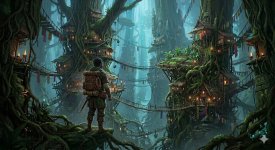
Tungwa is the intellectual and industrial heart of central Seldwa, positioned south of the northern kingdoms. Once celebrated as a beacon of medical enlightenment—famed for the legendary Year *** mission to Nevos—the Republic has recently pivoted from a cautious diplomatic state into a roaring industrial engine. Under new, firm leadership, it is a land of contradictions: ancient, humid rainforests are being systematically leveled to make room for gleaming stone metropolises, and the pursuit of scientific progress now marches hand-in-hand with an iron-fisted military expansion.
THE REPUBLIC LANDS
| Territory | Governance | Identity & specialty |
| The Capital Districts | The Council of Six | Par Quan and Taina. The "Clinic" of the world. Housing the Great Archives, medical universities, and the seat of political power. |
| The Expansion Zones | Merchant Elite | The central riverlands. Sprawling urban developments where the rainforest is cleared for lumber and new trade markets. |
| The Border Prefectures | Tungwa Defense Forces | The Northern and Southern fringes. Heavily fortified outposts ensuring sovereignty against "northern instability" and southern desert influence. |
LAW & SOCIAL MECHANICS
- The Council Mandate: Governance is managed by a six-seat council, currently split between the traditionalist Kamfs and the progressive Ukukus. Since the landslide election of Year 236, the Council Leader holds a tie-breaking "Iron Vote," ending decades of gridlock.
- The Zero-Tolerance Policy: To combat the crime wave that followed the death of previous Council Leader Zoka Sunkutu, the Defense Forces and City Watch have been granted broad powers. Smuggling and "Shadow-Trade" are met with immediate asset seizure or conscription into forest-clearing labor gangs.
- The Gilded Axe: A state-sponsored economic initiative where construction merchants are given tax-free status to expand urban borders. This has led to the "Great Felling," where the southern rainforests are harvested at a record pace to fuel the Republic's booming infrastructure.
ETHNICITIES & PHYSIOLOGY
The Tungwan people are primarily Nomasda (but the population has a growing number of other ethnicities from around the known world). Two centuries of trade have created a diverse, resilient population:
- Stature: Average height is 5'9" to 6'2". They possess an athletic, lean build suited for the humid, dense environments of the riverlands.
- Appearance: Rich ebony to copper skin tones, often decorated with "Scholar-Ink"—tattoos indicating one’s level of medical or academic achievement.
- The Mixed Legacy: Following the rise of Council Leader Kacingilila, "Mixed" heritage (Kilderlander/Nomasda) is increasingly seen as a symbol of the "Modern Tungwan," moving away from the pure-blood rhetoric of the radical Kamfs.
RELIGION: THE FAITH OF CHITAPANKWA
Core Philosophy: The Disciplined Blade
The spiritual backbone of Tungwa is the worship of Chitapankwa, the Nomasda warrior-god. For most of Tungwa's history, the faith has centered on the "Discipline of the Blade"—the belief that strength, strategy, and self-mastery are the only defenses against a chaotic world. While the modern Republic prides itself on medical science, the military and the working class still look to Chitapankwa as the ultimate protector of the Nomasda soul.
The Pillars of the Blade (The Pantheon)
Chitapankwa:
The Great Warrior-God: The supreme deity of the Nomasda. He governs martial prowess, the strength of the Republic's borders, and the ancestral fire of the people. To serve the state is to serve the God.
The Healer’s Hand: A subordinate aspect of the faith, representing the scientific and medical wisdom that saved Nevos. It is viewed as the "sheath" that protects the blade of the people.
Krakou (The Southern Ghost):
An extremist religious movement originating in the deserts of Umushilika. In Tungwa, Krakou is not just a god of worship but a figure of terror—a convenient scapegoat for any official who disappears or any unrest that threatens the new order.
Key Rituals & Icons
The Binding of the Ink:
A rite of passage for young adults where their life’s chosen "Field" (Military, Medicine, or Trade) is tattooed onto their forearm in a ceremony of public commitment to Chitapankwa and the state.
The Clear-Cutting Rite:
Before a new sector of rainforest is felled, a small grove is "Preserved" in a stone courtyard to symbolize the victory of civilization and the warrior's will over the wild.
The Scapegoat Vigil:
A superstitious practice where citizens leave a "Void-Mark" on the doors of missing officials, a silent prayer to ward off the influence of the "Painted Men" from the South.
CURRENT ISSUES & STATUS
The Republic is currently in an era of aggressive, gilded prosperity. Council Leader Kacingilila, 38 years old, rules with a "Moderate Iron" that has silenced the bickering Council. While the economy is at an all-time high and crime is being purged from the streets, the cost is visible: the ancient rainforests are receding, and the "Clinic of Seldwa" is becoming a fortress. Whenever a political rival or a high-ranking general disappears, the government quickly points to the "ghosts" of the Cult of Krakou to avoid internal scrutiny. Below the surface, the remaining Kamfs whisper that the "Mixed Son" is selling the Nomasda soul to the northern merchants, one tree at a time.
____
The Warrior Nation of Umushilika
The Iron Blade of Seldwa
OVERVIEW
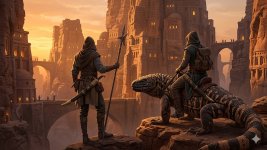
Umushilika is a sovereign military state carved from the harsh southern deserts of Seldwa. The land was first settled by Nomasda refugees fleeing the Kilderland-Nomasda War, it has transformed from a survivalist camp into a wealthy, isolationist titan. Defined by the Tayoma Decree and the mandatory conscription of every male at age thirteen, it is a land where merit is measured in blood and the economy is fueled by the dangerous trade of Imbulu components. Under the young General Umulwilwa Sunkutu, the nation stands as a wealthy fortress, haunted by the "ghosts" of its own religious extremism.
THE GENERALATE LANDS
| Territory | Governance | Identity & specialty |
| The Falcon’s Rest | The Sunkutu Generalate | The capital and primary fortress. A massive stone hub of military administration and the center of the southern economy. |
| The Deep Arid | District Commanders | The desert heartland. Home to "Desert-Farming" communities and the primary hunting grounds for the Imbulu trade. |
| The Ancient Ruins | Military Sentries | The forbidden Nomasda excavations. Officially off-limits to civilians and the suspected birthing ground of the Krakou Cult. |
LAW & SOCIAL MECHANICS
The Tayoma Decree:
The absolute law of succession. Any Nomasda of proven merit may challenge the sitting General to ritual combat for the right to rule. Leadership is a trophy of strength, not a birthright, though recent transitions have faced scrutiny as "staged" political theater.
The Thirteen Law:
Mandatory military service beginning at age thirteen for all males. This ensures a 100% literacy and combat-readiness rate among the citizenry, creating a society where every man is a career soldier first and a civilian second.
The Desert-Farming Miracle:
A state-led agricultural revolution that utilized Nomasda engineering to bloom the desert. This, combined with the Imbulu component trade, has made Umushilika one of the wealthiest nations on Seldwa.
ETHNICITIES & PHYSIOLOGY
The Umushilikan populace consists of high-density Nomasda lineages, bred for endurance:
- Stature: Average height is 5'10" to 6'2". They are characterized by massive frames and high bone density, a physical necessity for the "Heavy Armor" doctrine of the Southern Army.
- Appearance: Dark, sun-weathered skin often marked by ritual scarring or "Beast-Marks"—scars earned during successful Imbulu hunts.
- The Pure-Blood Ideology: Unlike the mixed-heritage shift in Tungwa, Umushilikans pride themselves on "Unbroken Lineage," viewing northern blood as a dilution of the warrior spirit.
RELIGION: THE TRADITION OF KRAKOU
Core Philosophy: The Ancestral Return
The official faith is the worship of Chitapankwa, the Warrior-God. However, the discovery of the Krakou ruins (supposedly meaning "Tradition") in Year 220 of the Tungwan Calendar sparked a radical religious shift. The "Tradition" movement believes the Nomasda must return to their tribal roots and dismantle the "northern-style" military government to achieve spiritual purity.
The Pillars of the Desert (The Pantheon)
Chitapankwa:
The Iron Father: The primary god of the military state. He represents discipline, the shield, and the law of the Generalate.
Krakou:
The Silent Spirit: The god of "Tradition." Once a forgotten deity, he is now the figurehead of the "Painted Men"—the Cult that demands an end to the current military system.
The Imbulu:
The Sacred Adversary: Large desert predators viewed as divine tests sent by the gods. To kill one is to absorb a fragment of the desert's own strength.
Key Rituals & Icons
The First Blood:
A ritual held for thirteen-year-old draftees. They are sent into the Deep Arid to survive a night alone. Those who return are considered "Men of the Law" and officially enter the army.
The Painted Faces:
A forbidden mark of the Cult of Krakou. White or red clay patterns applied to the face to represent a return to their ancestor's indigenous ways. Simply wearing the paint is a capital offense in Falcon's Rest.
The Sand-Exchange:
The ritualistic Tayoma combat. While legally a fight to the death, it is the spiritual anchor of the nation, ensuring that only the "strongest" soul leads the people.
CURRENT ISSUES & STATUS
The young Warrior-Nation is at an economic peak but a social breaking point. General Umulwilwa Sunkutu, 20 years old, rules a nation that is wealthier than it has ever been, yet deeply paranoid. Though the Cult of Krakou hasn't been seen in years, the "ghosts" of the Painted Men are blamed for every missing officer or military failure. The Regency of Vunda Nana has ended, but the suspicion of a sham exchange of power still lingers amonsgt the District Commanders & Sub-Generals.
____
The "Savage Lands" of Talijan
WIP (Off continent)
The Merchant Cities of Cission
WIP
The Dominion of Al-Jaysh
WIP (Off Continent)