VeiledArchive
Keeper of the Veiled Archive
- Local time
- Today 12:21 PM
- Messages
- 11
- Age
- 22
- Pronouns
- She/Her
Mireya Orsin
Some things haunt houses. Some haunt bloodlines. Mireya has always been more interested in the things that haunt possibilities.
Dossier
Name: Mireya Solenne Orsin
Alias: Mira, Morrow, The Notary, The Woman Behind the Glass, The Notary of Unhappened Things
Age: 29
Born: April 18, 1997
Race: Human-born Witch
Birthplace: Trieste, Italy
Sex/Gender: Female
Sexuality: Bisexual
Occupation: Forensic Provenance Specialist / Private Recovery Consultant
Alias: Mira, Morrow, The Notary, The Woman Behind the Glass, The Notary of Unhappened Things
Age: 29
Born: April 18, 1997
Race: Human-born Witch
Birthplace: Trieste, Italy
Sex/Gender: Female
Sexuality: Bisexual
Occupation: Forensic Provenance Specialist / Private Recovery Consultant
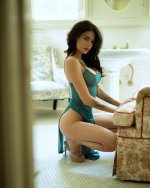
Hair: Naturally dark, usually worn long
Eyes: Grey-green
Height: Approximately 5'7"
Build: Curvaceous, feminine, long-legged
Tattoos: Botanical work along her arms and shoulders, created partly as mnemonic architecture
Piercings: Ears
Status: Unmarried, deliberately childless
Eyes: Grey-green
Height: Approximately 5'7"
Build: Curvaceous, feminine, long-legged
Tattoos: Botanical work along her arms and shoulders, created partly as mnemonic architecture
Piercings: Ears
Status: Unmarried, deliberately childless
Personality
Mireya is observant before she is trusting and curious long after common sense suggests she should stop. She reads people through their omissions, habits and contradictions rather than accepting whatever version of themselves they offer first. Confidence comes naturally to her, though it should never be mistaken for carelessness. She understands danger remarkably well. She simply refuses to treat fear as an instruction.
Her humor tends toward dry, irreverent and occasionally wicked, particularly when circumstances become too serious for everyone else's comfort. Flirtation comes easily when she is interested, though attraction does not automatically translate into vulnerability. Mireya likes remaining difficult to categorize. She can be warm without becoming transparent, intimate without surrendering control and honest while still leaving half the truth comfortably in shadow.
Years spent questioning the reliability of her own memories left her unusually devoted to evidence. She writes things down. Keeps ledgers. Dates documents. Preserves receipts, photographs and handwritten notes because memory, in her experience, is merely testimony. Documentation is proof. Beneath the composure is someone deeply aware that people, histories and even identities can be edited out of existence if the wrong forces decide they are inconvenient.
Her independence is both strength and defense mechanism. Mireya has never built her life around permanence and does not require conventional domesticity to feel complete. She values chosen loyalty far more than inherited obligation and prefers complicated truths to comforting lies. When she cares, however, she cares with an intensity she rarely advertises.
Her humor tends toward dry, irreverent and occasionally wicked, particularly when circumstances become too serious for everyone else's comfort. Flirtation comes easily when she is interested, though attraction does not automatically translate into vulnerability. Mireya likes remaining difficult to categorize. She can be warm without becoming transparent, intimate without surrendering control and honest while still leaving half the truth comfortably in shadow.
Years spent questioning the reliability of her own memories left her unusually devoted to evidence. She writes things down. Keeps ledgers. Dates documents. Preserves receipts, photographs and handwritten notes because memory, in her experience, is merely testimony. Documentation is proof. Beneath the composure is someone deeply aware that people, histories and even identities can be edited out of existence if the wrong forces decide they are inconvenient.
Her independence is both strength and defense mechanism. Mireya has never built her life around permanence and does not require conventional domesticity to feel complete. She values chosen loyalty far more than inherited obligation and prefers complicated truths to comforting lies. When she cares, however, she cares with an intensity she rarely advertises.
Likes: Old books, impossible histories, antique objects, strong coffee, good bourbon, rain, archives, quiet observation, dark humor, beautiful clothing, difficult questions
Loves: Freedom, truth, forgotten stories, chosen loyalty, uncovering what others tried to erase
Alignment: Morally grey / fiercely self-directed
Magic: Vestige Work, Palimpsest manipulation, Residual Sight, Redaction and Borrowed Outcomes
Other: Her magic is never free. Larger alterations can consume certainty, memory, emotional associations, skills or pieces of identity.
Loves: Freedom, truth, forgotten stories, chosen loyalty, uncovering what others tried to erase
Alignment: Morally grey / fiercely self-directed
Magic: Vestige Work, Palimpsest manipulation, Residual Sight, Redaction and Borrowed Outcomes
Other: Her magic is never free. Larger alterations can consume certainty, memory, emotional associations, skills or pieces of identity.
History
Mireya Solenne Orsin was born on April 18, 1997, in Trieste, into a family whose history revolved less around power than documentation. The Orsins produced archivists, translators, librarians, restorers and witnesses, people who spent generations preserving what everyone else eventually forgot. Her father, Lucien Serrat, was a French architectural-lighting designer with no supernatural ability whatsoever, but he taught Mireya to notice the world through shadow, angle and interruption. Her mother, Eveline Orsin, understood much more. A gifted document conservator with knowledge of the occult, Eveline recognized what Mireya was long before Mireya possessed language for it.
Her first manifestation came at eleven when she entered a room of stored objects she had been forbidden to touch and placed her hand upon a silver necklace dating to 1978. Instead of merely sensing its history, Mireya saw something stranger: not quite what had happened, but something that might have happened. Eveline began training her privately afterward, teaching observation, languages, archives, legal history, probability, logic and memory alongside the dangerous magical discipline their family called Vestige Work.
Vestige Work concerns the remains of abandoned possibilities. Every decision kills thousands of outcomes. Every accident creates paths reality refuses to take. Every object, person and place carries faint pressure from versions of events that almost existed. Mireya learned to perceive those remnants through Residual Sight and eventually to interact with the deeper structure known as the Palimpsest, reality layered over all the possibilities it discarded.
At fifteen, Mireya discovered exactly what that power could cost. During a fire, one possible outcome ended with her escaping through smoke with burns and injuries. Another ended beneath a collapsing corridor. Eveline refused to accept the latter and forced reality to retain the surviving conclusion. It was not resurrection. It was replacement. Probability demanded payment anyway. Mireya survived carrying memories from both possibilities while her father lost something far more precise: certainty that he had ever possessed a daughter.
For nearly two years afterward Mireya suffered bleedthrough between contradictory memories, insomnia, dissociation and the unsettling knowledge that evidence could disagree with lived experience. Documentation became sacred. She kept ledgers because memory could lie. She began her tattoos at eighteen, the botanical patterns functioning partly as mnemonic architecture, physical anchors for facts and associations she refused to risk losing.
At nineteen, Eveline disappeared. Not merely missing, but methodically removed. Records concerning her began collapsing into contradiction or absence. What remained behind were forty-seven boxes, two firearms, forged passports, cash, artifacts, ciphered notebooks, Eveline's pen and one instruction: Do not come looking for me.
Mireya did what Mireya generally does with instructions she dislikes.
She looked.
Seven years of searching turned a private obsession into a profession. Mireya became an independent forensic provenance specialist and private recovery consultant, investigating stolen artwork, fraudulent ownership, disputed inheritances, missing records and objects whose histories refuse to remain sensible. To ordinary clients she is exceptionally good at following paper trails. To those who know what they are looking at, she is something significantly more dangerous.
Her magic allows her to perceive residual possibilities, expose erased histories, strengthen or identify certain supernatural contracts and, under dangerous circumstances, replace an existing outcome with one reality previously discarded. Redaction can remove elements from an established chain of events. Borrowed Outcomes can drag an unrealized possibility close enough to become real. Neither is safe. Vestige Work operates according to balance, and reality is a patient creditor. The greater Mireya's interference, the more personal the payment can become: certainty, memories, skills, attachments, recognition, even pieces of identity.
That cost is why she rarely treats magic casually, no matter how casually she treats danger. Somewhere beneath every investigation remains the same unanswered question that began when she was nineteen. What happened to Eveline Orsin, and what could frighten a woman capable of editing reality badly enough to erase herself before telling her daughter not to follow?
Her first manifestation came at eleven when she entered a room of stored objects she had been forbidden to touch and placed her hand upon a silver necklace dating to 1978. Instead of merely sensing its history, Mireya saw something stranger: not quite what had happened, but something that might have happened. Eveline began training her privately afterward, teaching observation, languages, archives, legal history, probability, logic and memory alongside the dangerous magical discipline their family called Vestige Work.
Vestige Work concerns the remains of abandoned possibilities. Every decision kills thousands of outcomes. Every accident creates paths reality refuses to take. Every object, person and place carries faint pressure from versions of events that almost existed. Mireya learned to perceive those remnants through Residual Sight and eventually to interact with the deeper structure known as the Palimpsest, reality layered over all the possibilities it discarded.
At fifteen, Mireya discovered exactly what that power could cost. During a fire, one possible outcome ended with her escaping through smoke with burns and injuries. Another ended beneath a collapsing corridor. Eveline refused to accept the latter and forced reality to retain the surviving conclusion. It was not resurrection. It was replacement. Probability demanded payment anyway. Mireya survived carrying memories from both possibilities while her father lost something far more precise: certainty that he had ever possessed a daughter.
For nearly two years afterward Mireya suffered bleedthrough between contradictory memories, insomnia, dissociation and the unsettling knowledge that evidence could disagree with lived experience. Documentation became sacred. She kept ledgers because memory could lie. She began her tattoos at eighteen, the botanical patterns functioning partly as mnemonic architecture, physical anchors for facts and associations she refused to risk losing.
At nineteen, Eveline disappeared. Not merely missing, but methodically removed. Records concerning her began collapsing into contradiction or absence. What remained behind were forty-seven boxes, two firearms, forged passports, cash, artifacts, ciphered notebooks, Eveline's pen and one instruction: Do not come looking for me.
Mireya did what Mireya generally does with instructions she dislikes.
She looked.
Seven years of searching turned a private obsession into a profession. Mireya became an independent forensic provenance specialist and private recovery consultant, investigating stolen artwork, fraudulent ownership, disputed inheritances, missing records and objects whose histories refuse to remain sensible. To ordinary clients she is exceptionally good at following paper trails. To those who know what they are looking at, she is something significantly more dangerous.
Her magic allows her to perceive residual possibilities, expose erased histories, strengthen or identify certain supernatural contracts and, under dangerous circumstances, replace an existing outcome with one reality previously discarded. Redaction can remove elements from an established chain of events. Borrowed Outcomes can drag an unrealized possibility close enough to become real. Neither is safe. Vestige Work operates according to balance, and reality is a patient creditor. The greater Mireya's interference, the more personal the payment can become: certainty, memories, skills, attachments, recognition, even pieces of identity.
That cost is why she rarely treats magic casually, no matter how casually she treats danger. Somewhere beneath every investigation remains the same unanswered question that began when she was nineteen. What happened to Eveline Orsin, and what could frighten a woman capable of editing reality badly enough to erase herself before telling her daughter not to follow?