- Local time
- Today 2:15 PM
- Messages
- 457
- Pronouns
- she/her

Setting the Scene
The story takes place in 370 CE, during the long period of conflict between the Roman Empire and the Sasanian (Sassanid) Persian Empire, two ancient superpowers locked in centuries of intermittent warfare, political rivalry, uneasy diplomacy, and cultural exchange. Rome and Persia are both highly advanced imperial societies with long histories, elaborate court traditions, professional armies, rigid social hierarchies, and strong ideas about legitimacy and rulership. They hate each other, imitate each other, trade with each other, and remain deeply obsessed with one another.
The border between them stretches across Mesopotamia, Armenia, Syria, and the eastern frontier provinces; regions that have spent generations changing hands, rebuilding after wars, and surviving beneath the weight of imperial ambition.

The Roman Empire
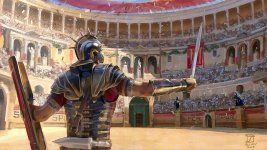
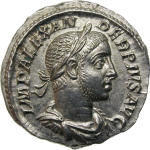
Rome is vast, old, bureaucratic, and deeply hierarchical. Even weakened by internal instability and endless wars, it still views itself as the center of civilization. Roman identity is tied heavily to ideas of order, law, military discipline, and imperial superiority. By 370 CE, the empire is increasingly centered around Constantinople in the east, though Rome itself still carries enormous symbolic weight as the old imperial heart of the empire.
Roman politics are volatile. Court life is full of rival noble families, military influence, assassinations, succession crises, religious disputes and fragile alliances. Public image matters enormously. Emperors and rulers are expected to project strength constantly, even when the empire itself is strained.
Roman society is deeply patriarchal. Women can wield influence, particularly within the imperial court, but often indirectly or through dynastic legitimacy rather than open authority. A ruling woman would face enormous scrutiny, especially if there are male heirs or rival claimants nearby.
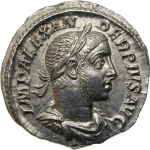
Roman Military Culture
The Roman military remains one of the empire’s defining institutions. Though the classical legionary image still influences Roman identity, the military of this period is more diverse and adaptive than the early empire. Cavalry plays a far larger role than in earlier centuries, partly due to Persian influence. Roman armies include heavy infantry, cavalry, archers, mercenaries, frontier troops and allied forces from various provinces.
Military service is tied heavily to prestige, political power, and citizenship.
The Roman frontier with Persia is one of the most militarized regions in the known world.
Roman Religion
By 370 CE, Christianity has become deeply embedded within imperial Roman society, particularly among political institutions and the upper classes. However, older Roman beliefs and local pagan traditions have not disappeared entirely. Temples, older customs, and regional cults still survive in parts of the empire, creating ongoing religious tension beneath the surface of public life. Religion within Rome is political as much as spiritual. Disputes over doctrine, legitimacy, and divine authority can influence entire wars.

Persia
The Sasanian Empire
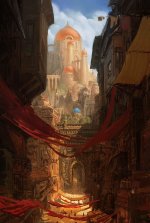
The Sasanian Empire is Rome’s great eastern rival. Ruled by the House of Sasan, the empire presents itself not merely as another kingdom, but as the rightful continuation of ancient Persian imperial tradition. Persian kings use the title Shahanshah (King of Kings). Kingship is treated as sacred, cosmic, and divinely sanctioned.
Ctesiphon is the primary imperial capital of the Sasanian Empire. Located near the Tigris River in Mesopotamia, it functions as the political and ceremonial center of Persian imperial life. For Rome, Ctesiphon represents the heart of Persia itself.
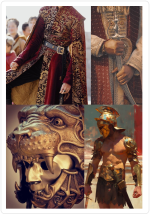
Persian court culture is elaborate, ceremonial, and intensely hierarchical. The empire values nobility, military prestige, lineage, diplomacy, court etiquette, and public displays of wealth and authority. Unlike the Roman image of controlled austerity, Persian aristocratic culture tends toward visible magnificence; richly embroidered silks, gold jewelry, perfumes and incense, bright and colourful fabrics, ceremonial armor, and lavish feasts.
Persian nobility are expected to be both politically educated and militarily capable.
Persian Military Culture
Persian warfare places enormous emphasis on cavalry. The elite mounted warrior aristocracy are known as the Aswaran, noble cavalrymen trained from youth.
Heavy cavalry and cataphracts are especially important. Cataphracts are heavily armored horsemen, sometimes with armor covering both rider and horse, designed for devastating shock charges.
Persian princes are expected to participate in military campaigns from a young age. Royal legitimacy is tied closely to visible courage and battlefield competence. A prince who has never ridden with armies would likely be viewed as weak.
Persian Religion
The dominant religion of the Sasanian Empire is Zoroastrianism. The supreme deity is Ahura Mazda, associated with wisdom, truth, order, and light. The religion centers heavily around the struggle between truth and lies, order and chaos, and light and darkness. Fire is sacred within the religion, not because Persians worship fire itself, but because fire represents purity and divine truth.
Royal authority is closely tied to the concept of divine glory, often referred to as xwarrah (a kind of sacred royal radiance or divine favour associated with kingship).
Sunlight, gold, and radiance all carry strong symbolic importance within Persian royal imagery.

Greece & Hellenistic Influence
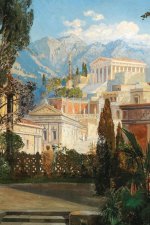
Though Greece no longer exists as an independent imperial rival to Rome in this period, Greek culture remains enormously influential throughout the eastern Mediterranean. Greek language, philosophy, education, rhetoric, and art shape much of elite society across both Roman and eastern territories.
Many educated nobles (Roman and Persian alike) would likely speak Greek to some degree. Greek remains one of the major languages of diplomacy, scholarship, and administration in many eastern regions.
Because of Alexander the Great’s earlier conquests centuries prior, Persian and Greek cultural influences have already been entangled for generations.

Court Culture
Roman Court
Roman court life is tense, competitive, and deeply performative. Reputation matters, and people survive through political alliances, marriage, military favour, strategic loyalty and a careful;y curated public image. Rumours can destroy lives as effectively as armies.
Foreigners within the court are viewed with fascination and suspicion simultaneously.
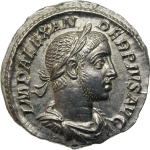
Persian Court
Persian court culture is more overtly ceremonial and aristocratic. Hierarchy is rigid and carefully observed. Appearance matters enormously; clothing, posture, jewelry, language, and etiquette all communicate status.
Persian nobility are expected to embody visible refinement alongside military competence.

War
Neither Rome nor Persia is truly winning. After centuries of warfare, both empires are strained economically, politically, and socially.
Entire generations have grown up knowing little except border conflict.

Last edited: