World Si Vis Pacem, Para Bellum [Worldbuilding & Planning]

Currently reading:
World Si Vis Pacem, Para Bellum [Worldbuilding & Planning]

Eunoia

I'm feeling quite hungry
Inner Sanctum Nobility
Local time
Today 7:21 PM
Messages
367
Pronouns
she/her
tumblr_0df59809604e5f1c021e13ece22e7a19_9220e6ee_1280.png


Setting the Scene

The story takes place in 370 CE, during the long period of conflict between the Roman Empire and the Sasanian (Sassanid) Persian Empire, two ancient superpowers locked in centuries of intermittent warfare, political rivalry, uneasy diplomacy, and cultural exchange. Rome and Persia are both highly advanced imperial societies with long histories, elaborate court traditions, professional armies, rigid social hierarchies, and strong ideas about legitimacy and rulership. They hate each other, imitate each other, trade with each other, and remain deeply obsessed with one another.

The border between them stretches across Mesopotamia, Armenia, Syria, and the eastern frontier provinces; regions that have spent generations changing hands, rebuilding after wars, and surviving beneath the weight of imperial ambition.



tumblr_8166524fd6ac9c5fd515fdc44833ed5e_8134ffaa_1280.png


The Roman Empire
db4ddfc946a646199a787a33a1d5f021.jpg
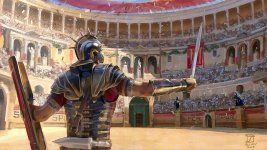
Rome is vast, old, bureaucratic, and deeply hierarchical. Even weakened by internal instability and endless wars, it still views itself as the center of civilization. Roman identity is tied heavily to ideas of order, law, military discipline, and imperial superiority. By 370 CE, the empire is increasingly centered around Constantinople in the east, though Rome itself still carries enormous symbolic weight as the old imperial heart of the empire.

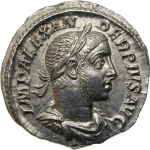
Roman politics are volatile. Court life is full of rival noble families, military influence, assassinations, succession crises, religious disputes and fragile alliances. Public image matters enormously. Emperors and rulers are expected to project strength constantly, even when the empire itself is strained.

Roman society is deeply patriarchal. Women can wield influence, particularly within the imperial court, but often indirectly or through dynastic legitimacy rather than open authority. A ruling woman would face enormous scrutiny, especially if there are male heirs or rival claimants nearby.

roman-empire-ancient-rome-roman-emperor-coin-roman-currency-coin-5e55a07e51be13703c39459da57c0...png

Roman Military Culture

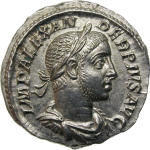
The Roman military remains one of the empire’s defining institutions. Though the classical legionary image still influences Roman identity, the military of this period is more diverse and adaptive than the early empire. Cavalry plays a far larger role than in earlier centuries, partly due to Persian influence. Roman armies include heavy infantry, cavalry, archers, mercenaries, frontier troops and allied forces from various provinces.

Military service is tied heavily to prestige, political power, and citizenship.

The Roman frontier with Persia is one of the most militarized regions in the known world.

roman-empire-ancient-rome-roman-emperor-coin-roman-currency-coin-5e55a07e51be13703c39459da57c0...png

Roman Religion

By 370 CE, Christianity has become deeply embedded within imperial Roman society, particularly among political institutions and the upper classes. However, older Roman beliefs and local pagan traditions have not disappeared entirely. Temples, older customs, and regional cults still survive in parts of the empire, creating ongoing religious tension beneath the surface of public life. Religion within Rome is political as much as spiritual. Disputes over doctrine, legitimacy, and divine authority can influence entire wars.


tumblr_8166524fd6ac9c5fd515fdc44833ed5e_8134ffaa_1280.png


Persia
The Sasanian Empire
61e6194195be22cc3f7c93cfccc7ad23.jpg
The Sasanian Empire is Rome’s great eastern rival. Ruled by the House of Sasan, the empire presents itself not merely as another kingdom, but as the rightful continuation of ancient Persian imperial tradition. Persian kings use the title Shahanshah (King of Kings). Kingship is treated as sacred, cosmic, and divinely sanctioned.

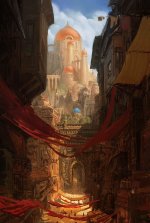
Ctesiphon is the primary imperial capital of the Sasanian Empire. Located near the Tigris River in Mesopotamia, it functions as the political and ceremonial center of Persian imperial life. For Rome, Ctesiphon represents the heart of Persia itself.

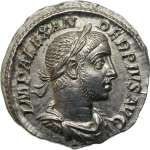
Persian court culture is elaborate, ceremonial, and intensely hierarchical. The empire values nobility, military prestige, lineage, diplomacy, court etiquette, and public displays of wealth and authority. Unlike the Roman image of controlled austerity, Persian aristocratic culture tends toward visible magnificence; richly embroidered silks, gold jewelry, perfumes and incense, bright and colourful fabrics, ceremonial armor, and lavish feasts.

Persian nobility are expected to be both politically educated and militarily capable.

roman-empire-ancient-rome-roman-emperor-coin-roman-currency-coin-5e55a07e51be13703c39459da57c0...png

Persian Military Culture

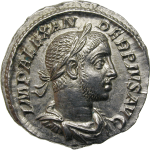
Persian warfare places enormous emphasis on cavalry. The elite mounted warrior aristocracy are known as the Aswaran, noble cavalrymen trained from youth.

Heavy cavalry and cataphracts are especially important. Cataphracts are heavily armored horsemen, sometimes with armor covering both rider and horse, designed for devastating shock charges.

Persian princes are expected to participate in military campaigns from a young age. Royal legitimacy is tied closely to visible courage and battlefield competence. A prince who has never ridden with armies would likely be viewed as weak.
roman-empire-ancient-rome-roman-emperor-coin-roman-currency-coin-5e55a07e51be13703c39459da57c0...png

Persian Religion

The dominant religion of the Sasanian Empire is Zoroastrianism. The supreme deity is Ahura Mazda, associated with wisdom, truth, order, and light. The religion centers heavily around the struggle between truth and lies, order and chaos, and light and darkness. Fire is sacred within the religion, not because Persians worship fire itself, but because fire represents purity and divine truth.

Royal authority is closely tied to the concept of divine glory, often referred to as xwarrah (a kind of sacred royal radiance or divine favour associated with kingship).

Sunlight, gold, and radiance all carry strong symbolic importance within Persian royal imagery.


tumblr_8166524fd6ac9c5fd515fdc44833ed5e_8134ffaa_1280.png


Greece & Hellenistic Influence

a37c557439c79a2a5f175b921c554dc0.jpg
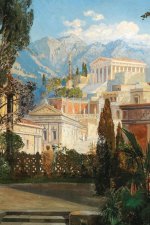
Though Greece no longer exists as an independent imperial rival to Rome in this period, Greek culture remains enormously influential throughout the eastern Mediterranean. Greek language, philosophy, education, rhetoric, and art shape much of elite society across both Roman and eastern territories.

Many educated nobles (Roman and Persian alike) would likely speak Greek to some degree. Greek remains one of the major languages of diplomacy, scholarship, and administration in many eastern regions.

Because of Alexander the Great’s earlier conquests centuries prior, Persian and Greek cultural influences have already been entangled for generations.


tumblr_8166524fd6ac9c5fd515fdc44833ed5e_8134ffaa_1280.png


Court Culture
Roman Court

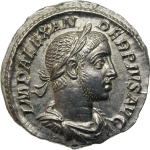
Roman court life is tense, competitive, and deeply performative. Reputation matters, and people survive through political alliances, marriage, military favour, strategic loyalty and a careful;y curated public image. Rumours can destroy lives as effectively as armies.

Foreigners within the court are viewed with fascination and suspicion simultaneously.

roman-empire-ancient-rome-roman-emperor-coin-roman-currency-coin-5e55a07e51be13703c39459da57c0...png

Persian Court

Persian court culture is more overtly ceremonial and aristocratic. Hierarchy is rigid and carefully observed. Appearance matters enormously; clothing, posture, jewelry, language, and etiquette all communicate status.

Persian nobility are expected to embody visible refinement alongside military competence.



tumblr_8166524fd6ac9c5fd515fdc44833ed5e_8134ffaa_1280.png


War

Neither Rome nor Persia is truly winning. After centuries of warfare, both empires are strained economically, politically, and socially.

Entire generations have grown up knowing little except border conflict.


tumblr_0df59809604e5f1c021e13ece22e7a19_9220e6ee_1280.png
 
Last edited:
Darius Divider.png


Name:
Darius, Shahzadeh of the House of Sasan

Alias(es):
Dārayavauš (DAH-rah-yah-VAO-oosh), The Lion of Ctesiphon, The Red Prince

Age:
24

Gender:
Male

Occupation(s):
Shahzadeh of the House of Sasan and commander of the Aswaran (an elite cavalry corps)


Darius Divider.png


Description:
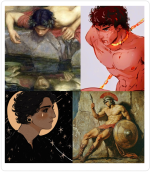
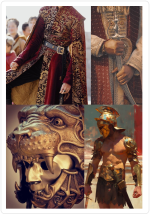
Darius’s nose sits slightly crooked from a break that healed imperfectly years ago, while a small notch through one eyebrow hints at a blade that once came far too close. Thick black curls frame a face marked by a jagged scar stretching from his cheekbone to beneath his jaw, the old wound pulling faintly whenever he smiles. Beneath heavy dark lashes rest striking honey-gold eyes, lined with kohl, deceptively warm at first glance. The prince’s complexion bears a sun-warmed olive tone; his body is lean, toned, and muscular after years of warfare and cavalry training, while his hands are rough with calluses and old cuts scattered across his knuckles. Faint smile lines linger around his mouth, subtle traces of someone who laughs more frequently than his reputation might suggest.

Height:
6'1

Wardrobe:

Darius favours rich, extravagant clothing, gravitating almost exclusively toward shades of deep red silk embroidered with gold thread. His wardrobe reflects both noble excess and military prestige: layered robes, fitted tunics, long ornate coats, broad belts adorned with precious metals, and finely crafted jewellery. Despite the luxury of his appearance, there is still some semblance of practicality. Soft silks are often paired with sturdy leather riding boots and garments cut for ease of movement. The scent of incense, smoke, and spiced oils tends to cling to both his clothing and skin. His armour carries the same philosophy. Rather than plain steel, Darius favours ornate gilded scale armour draped with crimson fabrics and gold detailing, crafted as much to inspire awe as to protect. His most distinctive piece is his helmet: forged in the likeness of a lion, with sculpted features framing the face and a mane-like crest sweeping back along the crown. Upon horseback, clad in red and gold beneath the snarling visage of the lion helm, he appears less like a man and more like something pulled from imperial legend.


Darius Divider.png


Personality:
Darius moves through the world with the kind of confidence that borders on arrogance. Social by nature, he gravitates toward crowded halls, conversation, spectacle, and excess, possessing a charisma that makes him difficult to dismiss even for those who dislike him. He enjoys luxury openly and without shame, and there is very little restraint in the way he presents himself to the world. At first glance, he can seem shallow because of it. Vain, indulgent, a prince more interested in appearances than substance. In reality, much of that image is intentional. Darius is deeply aware of how he is perceived and has long since learned to weaponise charm and humour. Though quick-tempered and often sharp-tongued, there is a warmth to Darius that emerges more clearly among those he trusts. He laughs easily, grows attached too quickly for his own good, and loves with a loyalty so stubborn it can become self-destructive once given. Years of warfare and political expectation have hardened him, though not enough to make him cold. If anything, Darius feels things too deeply and too intensely, burying them all beneath pride and performance.


Darius Divider.png


Skills:
Trained in swordsmanship, spear combat, and horseback fighting from a young age.
Charismatic speaker.
Highly educated in matters of court politics, diplomacy, and imperial etiquette.
Fluent in Middle Persian and Greek, with at least conversational Latin from years spent around Roman officials and diplomats.
Experienced strategist with strong battlefield instincts and a practical understanding of military logistics.
Exceptional horseman.
Socially adept and highly observant, particularly skilled at reading people.
Trained in hunting, falconry, and other noble pursuits expected of Persian royalty.


Darius Divider.png


Backstory:
Born into the House of Sasan, Dārayavauš was raised within the heart of the Sasanian court alongside his three brothers and younger sister, surrounded from birth by the expectations that seemed to follow royal children long before they were old enough to understand them. Life within the royal household was rarely simple. Affection and rivalry existed side by side, and while Darius was never the most disciplined of his siblings, he possessed the sort of charisma that naturally drew attention to him, whether welcome or not.

Like many princes of his station, he was educated not only in matters of politics and diplomacy but also in warfare. By the time he reached adulthood, Darius had already earned a reputation for himself among the Aswaran cavalry.

Though born into luxury, Darius was never kept far from war for very long. He rode with soldiers while still young enough to find glory in it all, and those early years shaped him more than anything else. The victories came quickly, as did the praise, and Darius grew used to being admired for it. Somewhere along the way, that confidence hardened into arrogance, fed by the belief, encouraged since childhood, that he had been born for greatness.

However, that belief fractured during a disastrous campaign against Roman forces near the western frontier. By the final hours, the battle had dissolved into chaos; cavalry lines broken apart, siege equipment burning, horses screaming beneath the crush of bodies as formations collapsed under panic. Darius fought until retreat was no longer possible, refusing to abandon his men even after the battle had already been lost. He was eventually captured alongside what remained of them, bloodied and exhausted.

His imprisonment should have ended with ransom negotiations or political exchange, as befitted a prince of his station. Instead, Rome chose humiliation. Stripped publicly of both rank and identity, Darius was transported west not as a diplomat or hostage, but as a spectacle. A conquered eastern prince displayed through Roman streets before eventually being sold into gladiatorial combat, valued less as a man than as the novelty of watching Persian nobility bleed within the arena.


Darius Divider.png
 
Last edited:
3bc574248a32e67295d15023a7345f4f5671b0d6.pnj


Name:
Eleadira Severan, Basilissa of House Severos
(el-eeya-die-rah)
Σλεαδιρα

Alias(es):
In Greece:
- The Dolia Basilissa (doh-lee-ah) meaning the deceitful, cunning, or treacherus Empress
- Kerkopis (kehr-koh-piss) (a rolled "R" sound) meaning a fox-like woman who is sly and scheming

In Rome:
- Domina Severan (doh-mee-nah) (Mistress Severan)

- Domina Serpens (Mistress Snake) (a mean, play-on-words of her last name)

Age:
24

Gender:
Female

Occupation(s):

Empress of Rome
Greece's Peace Bride


3bc574248a32e67295d15023a7345f4f5671b0d6.pnj


Description:

b3c8d51a26ad546747982168b5dde13a.webp
b4dc22498fe451d20f0e25be737548e9.webp
457ca6d0da35b2df63d11a1847d0b3f3.webp


Eleadira’s long black curls fall in thick waves past her waist, glossy and untamed despite the jewelry often woven through them. Her complexion carries a warm olive tone kissed by the Mediterranean sun, setting a striking contrast against the rich dark of her hair. Beneath a set of thicker, arched eyebrows deep, brown eyes so dark that they almost seem entirely black. Dark, thick eyelashes usually are occompanied by black or brown kohl. High cheekbones and a straight aristocratic nose lend her profile a regal sharpness, while full lips, usually painted in muted berry tones, curve easily into faint, unreadable smiles.

Though graceful in build, Eleadira is far from fragile. Years of riding and travel leave her figure lean and toned beneath layers of silk and gold-threaded fabric, her movements fluid and assured. Fine gold chains often rest against the hollow of her throat, drawing attention to sun-warmed skin seemingly unmarked and unscarred. Though that is not entirely the case, as pale scars run vertically up and down her back, a parting gift from her father many years ago. Adira’s hands are slender and elegant, though closer inspection reveals faint calluses along her palms from weaponry practice long discouraged yet never entirely abandoned.


Height:
5'7

Wardrobe:
98fc58da777506b6d8a809ca50d604a9.jpg
e835263a97fe4a44243acd29527f2930.jpg
238d4dfcff516041bdde01a772f3938b.jpg

Eleadira favours flowing silks and sheer chiffons in shades of royal purple, deep violet, and wine-dark plum, embroidered heavily with delicate gold thread. Raised among the refined courts of Greece before ascending to the Roman throne through marriage, her wardrobe blends Hellenic elegance with imperial exorbitance. Draped gowns, fitted stolas, translucent outer robes, gilded sashes, and jewellery adorned with pearls and amethysts. She is unashamed of her beauty, favouring plunging necklines, open backs, and fabrics that cling softly to the waist and hips while still carrying an unmistakable air of regal authority. The scent of lilac, myrrh, saffron, and incense smoke lingers upon both her clothing and skin.

Even in more formal or ceremonial settings, Eleadira dresses to inspire awe rather than practicality. Flowing purple mantles trimmed in gold fall from her shoulders like royal banners, while delicate gold breastpieces and ornamental girdles are worn more as symbols of status than protection. Her most distinctive adornment is a ceremonial headdress fashioned in the likeness of Hermes, with sweeping golden wings jutting out from either side of her head. Beneath her gold and purple silks, she appears less like a widowed empress and more like a figure set upon the throne by the Gods themselves.


3bc574248a32e67295d15023a7345f4f5671b0d6.pnj


Personality:
Eleadira Severan is defined first and foremost by control. To the world around her, she appears composed to an almost unnatural degree. She is a woman who rarely raises her voice, rarely shows when she is upset or angry, and almost never allows her true feelings to show in public. She was raised to think of neutrality as discipline. Her emotions are something she sees as needing to be maintained and perfected, otherwise they're just in the way. A successful day, in her mind, is one where she appears untouched by anything around her. Despite being a woman who rarely raises her voice, this is not at all natural to her.

To those she can trust, which are far and few between, she is known as an intense and passionate ruler. Anger, gried, desire, and ambition all exist deeply within her and fight to be seen. But none of these feelings are permitted by her to escape unfiltered. Instead, they accumulate beaneath the surface as she stuffs them away day in and day out. One day, she might just explode from the constant pressure. All in all, she is not at all emotionally absent as some might say, but quite the opposite.

There is also a quieter, more personal contradiction that Eleadira battles within her. The craving for control born from a lifetime of being controlled. Her hunger for power has never been about controlling others, but everything to do with controlling her own fate. Even in her authority, there is restraint. Because Adira understands what unchecked power does when it is placed in hands like those she once suffered under. She is not cruel by instinct, nor kind just for performance. She is deliberate. Everything she does is measured, even when the emotions behind it are not.

3bc574248a32e67295d15023a7345f4f5671b0d6.pnj


Skills:
Political intelligence such as diplomacy, strategic thinking, political theory, and war strategy
Minimal sword training, but excellent in archery and dagger usage

Multilingual fluency (Greek, Latin, Aramaic)
Harp playing
A fondness for marble carving (realized after stabbing marble with a knife after an emotional outburst)

3bc574248a32e67295d15023a7345f4f5671b0d6.pnj


Backstory:

Eleadira Severan was born into House Severos in Greece, a noble family tasked with preserving political stability between Greek territories and the expanding influence of Rome. From early childhood, she was not raised as a daughter in the traditional sense, but as a future instrument of diplomacy. Her father ruled her upbringing with absolute severity, believing that only perfection could ensure survival in the brutal landscape of the Roman Empire.

Her childhood was defined by strict discipline and punishment. Emotional expression was discouraged to the point of being treated as failure, and any deviation from perfection was corrected harshly. The long, thin scars across her back remain as a physical record of that upbringing, acting as reminders of a system built on control, fear, and obedience. By the time she reached adolescence, she was already being shaped as the ideal political bride. Composed, beautiful, obedient in appearance, and strategically valuable to Greece’s fragile relationship with Rome. She was not offered choice in this role. She was prepared for it as inevitability.

Adira was eventually sent to Rome as part of a peace arrangement, becoming what both nations viewed as a living treaty. Greece saw her as a sacrifice made to preserve stability, while Rome initially treated her as a symbol of Greece's submission. Her husband, Lucius Varro, became another source of control and abuse. Unlike her father’s discipline, his authority was political and possessive, reinforcing her status as property rather than partner.

Over time, Eleadira came to understand that she had never left her cage, she had only changed its shape.

It wasn't Lucius' abuse that was her breaking point. Lucius, as Rome's Emporer, was not holding up on his end of the peace treaty. Greece still suffered at the hands of Roman soldiers. Eventually, Adira knew what she had to do. She killed Lucius not in rage or emotional collapse, but in calculated silence through the act of poison. The act itself was not impulsive and instead compltely calculated. Her final rejection of a system that defined her only through ownership and obedience. In her own understanding, it was justified as the removal of a cruel ruler. The aftermath of Lucius' death fractured her existence.

Rome, unable to prove but sure of her murder, calls her a serpent. A foreign empress who infiltrated and destroyed their Emperor from within. Rome is also entirely unapproving of a widowed Empress ruling the Empire.

Greece, not longer seen as a rival to Rome, is still deeply invested in holding onto their influence within Rome. Because of this, Eleadira’s actions are constantly under scrutiny, as her every move now upholds the fragile diplomacy Rome and Greece have found. To preserve their standing within Rome, Greek elites publicly distance themselves from her after Lucius' death, re-branding her a traitor to Greece. Not for betraying a sovereign Greece, but for undermining the credibility of Greek influence itself.

Now, Eleadira exists in a state of political and personal exile, feeling as if she belongs to neither Greece nor Rome. She desires stability for both worlds and believes in a form of peace that does not require submission or sacrifice, but cannot achieve it herself.


3bc574248a32e67295d15023a7345f4f5671b0d6.pnj
 
Last edited:
Back
Top Bottom